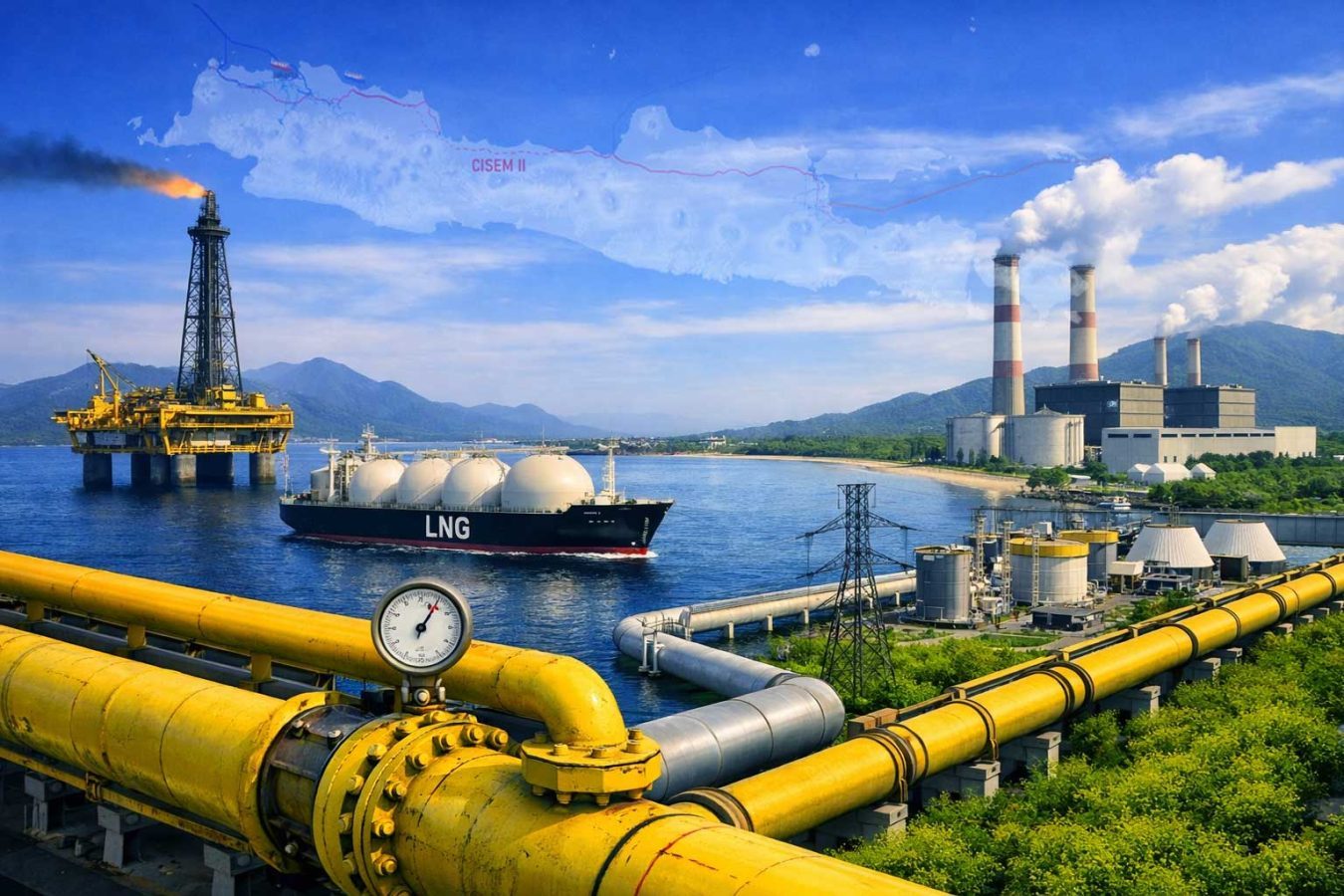
Java Island, especially West Java, is one of the main development centers with the highest energy consumption in Indonesia. High economic, industrial, and social activities require a large and reliable energy supply. However, West Java’s gas demand has depended on supply from outside the region, both through LNG and pipeline gas from Sumatra. This shows that although demand is high, local gas supply in West Java is still limited. Therefore, new supply options become important, one of which is the development of the CISEM II pipeline.
This project is expected to strengthen gas supply to West Java by connecting gas supply potential from East Java. More than just an additional infrastructure, CISEM II is part of the integration of the gas pipeline network across Java Island and also opens the possibility of wider connectivity between Java and Sumatra through projects such as the Dusem pipeline. With this connectivity, gas production that was previously locked geographically can now be delivered more flexibly to demand centers.
In concept, CISEM II offers an ideal solution by utilizing domestic gas to reduce dependence on LNG and create more competitive gas prices through network efficiency. In the short term, gas supply from East Java looks promising, supported by major production from some fields such as Jambaran Tiung Biru and Madura Strait. However, medium- to long-term challenges need to be considered. First, many gas fields in East Java will naturally decline, while development projects may not come on time or at the same scale. Unlike North Sumatra, East Java currently does not have new giant discoveries that could become large gas supply sources. Second, local demand in East Java continues to grow, which may reduce the surplus gas available to be transported through CISEM II. Third, integration with gas supply from Sumatra may create internal competition within the system, not only in terms of volume, but also price, pipeline access, and allocation priority.
Therefore, the role of CISEM II is not only as a transportation route, but also as an enabler of system flexibility. This infrastructure can help optimize gas flows, reduce bottlenecks, and improve supply reliability. In this context, LNG remains relevant. Although pipeline integration may reduce LNG demand as a base supply, LNG is still needed as a balancing and backup supply. LNG provides flexibility in volume, source, and quick response to demand fluctuations.
In conclusion, the future of gas in Java after CISEM II is not only about reducing LNG demand, but about optimizing the role of domestic gas, pipeline infrastructure, and LNG in an increasingly integrated system.
Ultimately, the key question is not whether LNG demand will increase or decrease, but:
can this integrated gas system balance domestic supply reliability and LNG flexibility in facing future uncertainties?