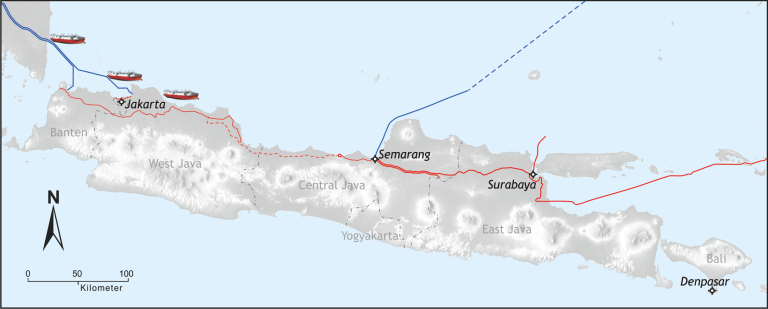

Indonesia is in the middle of a real data-center buildout. Cloud regions are expanding, AI inference is moving nearer to users, fintech and e-commerce keep scaling. While the demand is here, the question is whether power can keep up and at what cost.
Demand for data centers is growing fast
Enterprises are shifting the work that really matters into the cloud, startups directly built in the cloud, and global providers are setting up close to users to keep things fast. In short, digital economy is compounding, and the infrastructure must follow.
With demand growth comes an energy surge
More computing means more megawatts. As data center demand rises, the shape of consumption changes to longer high-load periods, sharper peaks, and greater sensitivity to heat and humidity. Electricity becomes the defining input of substation proximity, grid access, and total cost of service. In conclusion, you can secure the land and fiber, but energy availability and connectivity determine whether your data center can truly scale.
The core construction problem: build speed vs grid speed
Hyperscale facilities can be designed and built in 1–2 years but securing a firm grid connection and the long-term power supply behind it often takes 3–5 years. That mismatch is now the central constraint for new projects. It affects how quickly operators can commit to customers, what they can disclose about long-term energy, and how investors evaluate risk.
Batam shows both momentum and a squeeze on supply
Batam has become a focal point, tying Indonesia’s capacity buildout to Singapore-adjacent demand. As of October 2025, two data centers are operational, three are under construction, and eight more are announced. On current trajectories, as live sites ramp toward 2030, the existing PLN grid in Batam is unlikely to meet the load without additional capacity or upgrades.
As these sites ramp through the decade, the existing local grid will need meaningful reinforcement to keep pace. The differentiator won’t be how many projects are announced, but who can evidence credible power at scale. The one that can generate dependable electricity over time, transparent sourcing, and a realistic pathway that aligns construction schedules with power availability and sustainability expectations.
Indonesia’s priority: sustainability of supply
While regional conversations emphasize flexibility and reliability, Indonesia should keep a tight focus on sustainable supply. Many data centers are evaluating captive gas-based generation as a bridge, underscoring natural gas’ role in the transition, while flexible renewable options are being assessed alongside. The aim is simple: let power growth track digital growth without compromising transparency or resilience. So, what does sustainable supply look like?
- Balanced sourcing, not single-fuel dependence
Treat captive gas as a bridge, not destiny. Keep credible renewable pathways open so energy mix can evolve with technology, policy, and tenant expectations.
- Credible green attributes, not box-ticking
Move beyond generic certificates toward traceable, time-aligned evidence of renewable use where feasible, with clear disclosures when it isn’t.
- Operational resilience that complements sustainability
Flexibility tools (e.g., storage and smart controls) should support reliability and emissions goals, not work against them
- Siting and integration that lowers long-run risk
Favor locations and designs that minimize transmission losses, reduce exposure to power-quality disturbances, and enable straightforward environmental approvals and monitoring.
- Governance and transparency
Publish simple, verifiable statements about where power comes from today, how it evolves over time, and how environmental performance is measured
The aim is simple: let power growth keep pace with digital growth, while maintaining trust. In Indonesia’s context, that means acknowledging gas’s bridging role, building real options for renewables, and communicating clearly about what’s possible now versus what’s maturing, without compromising reliability or resilience.